(Re)tracing Routes
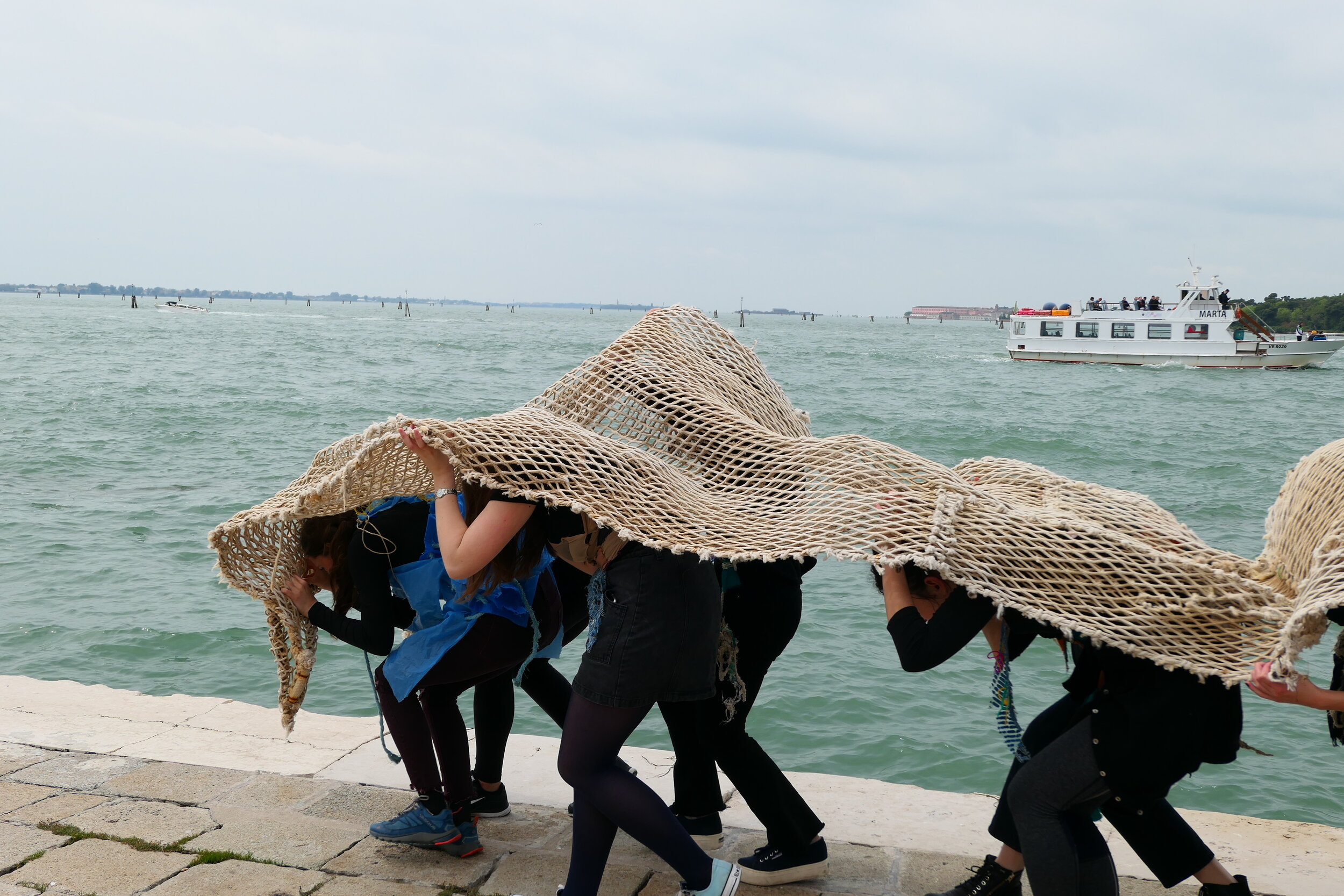
Found marine debris net, beach plastics, a dozen performers. Filmed by Althea Kuzman.
Performers: Phoebe Alexandra James, Francesca Morpurgo, Rada Kratchanova, Madalena Mendes, Jimena Ruiz Aguilar, Helene von Saldern, Anahit Poturyan, Hannah Rotwein, Ophelie Rodier, Louis Chapple, Julie Steyer, Jessica Lane, and Luz Edwards.
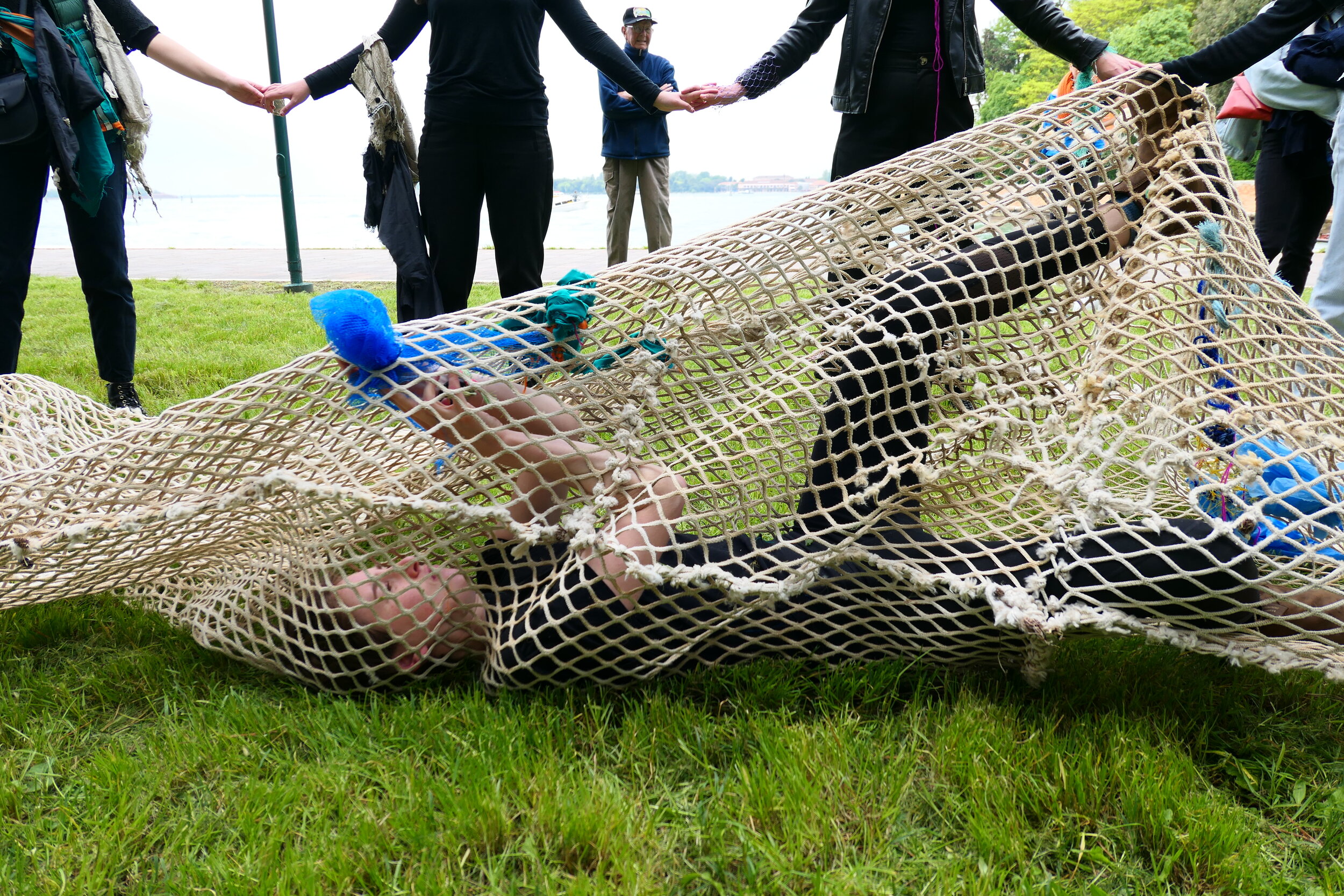
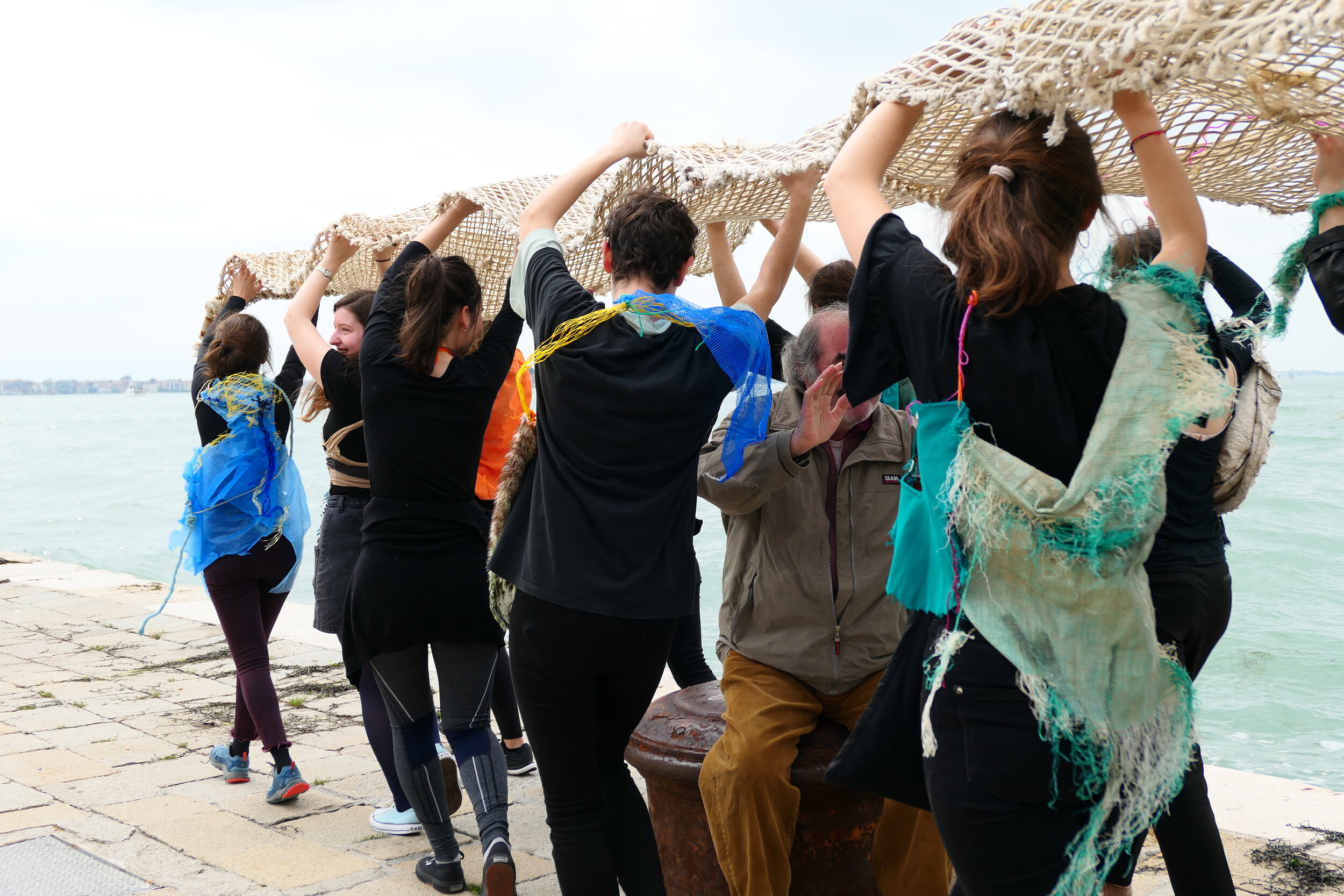
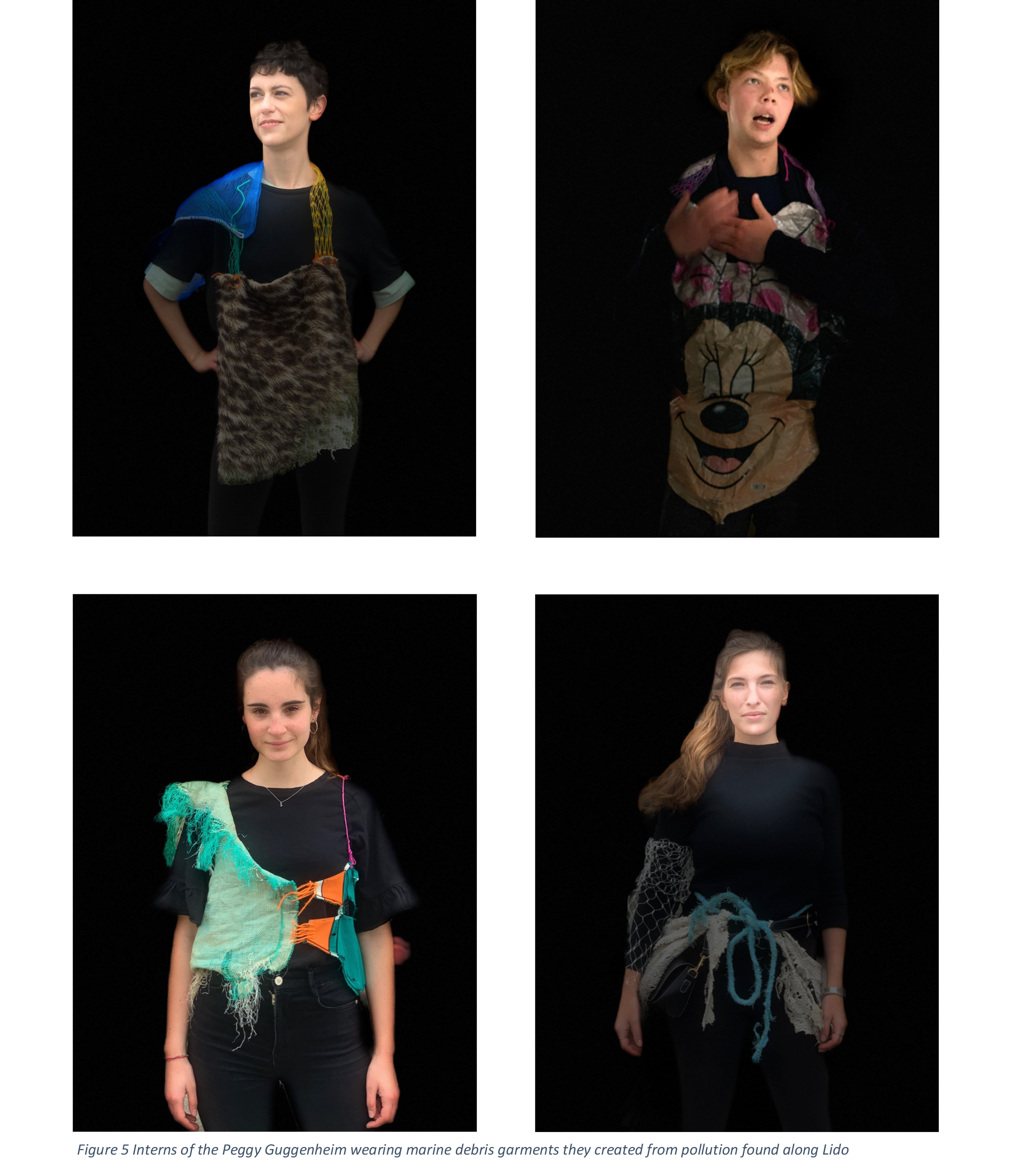
A marine debris performance with waste collected along the shores of Santa Maria del Mare in Veneto, Italy. A dozen museum interns adorned their clothing with various articles of synthetic scraps collected on the beach to circumnavigate the lagoon and culminate with a bioaccumulations ritual where they add their plastic waste to the large net.
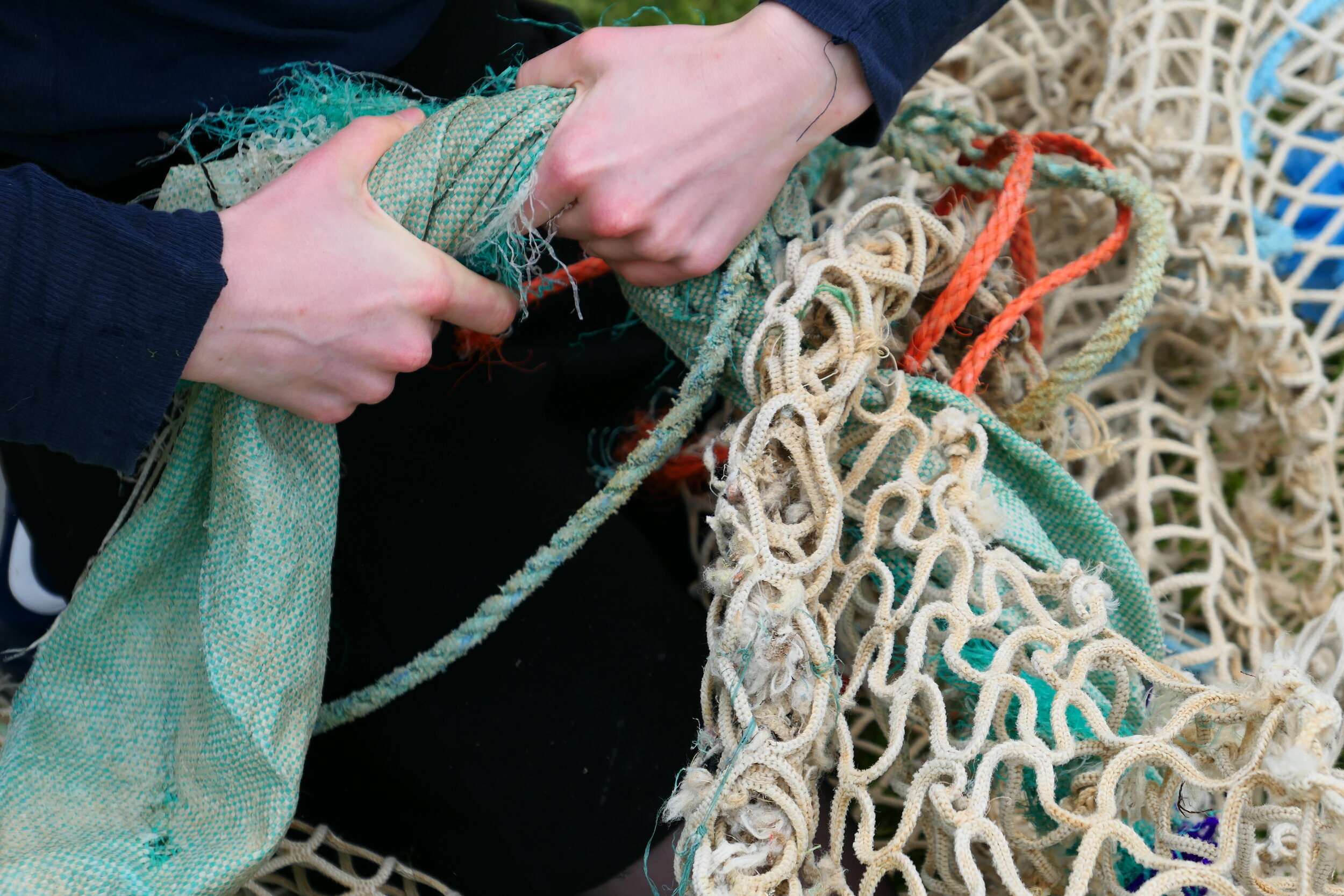
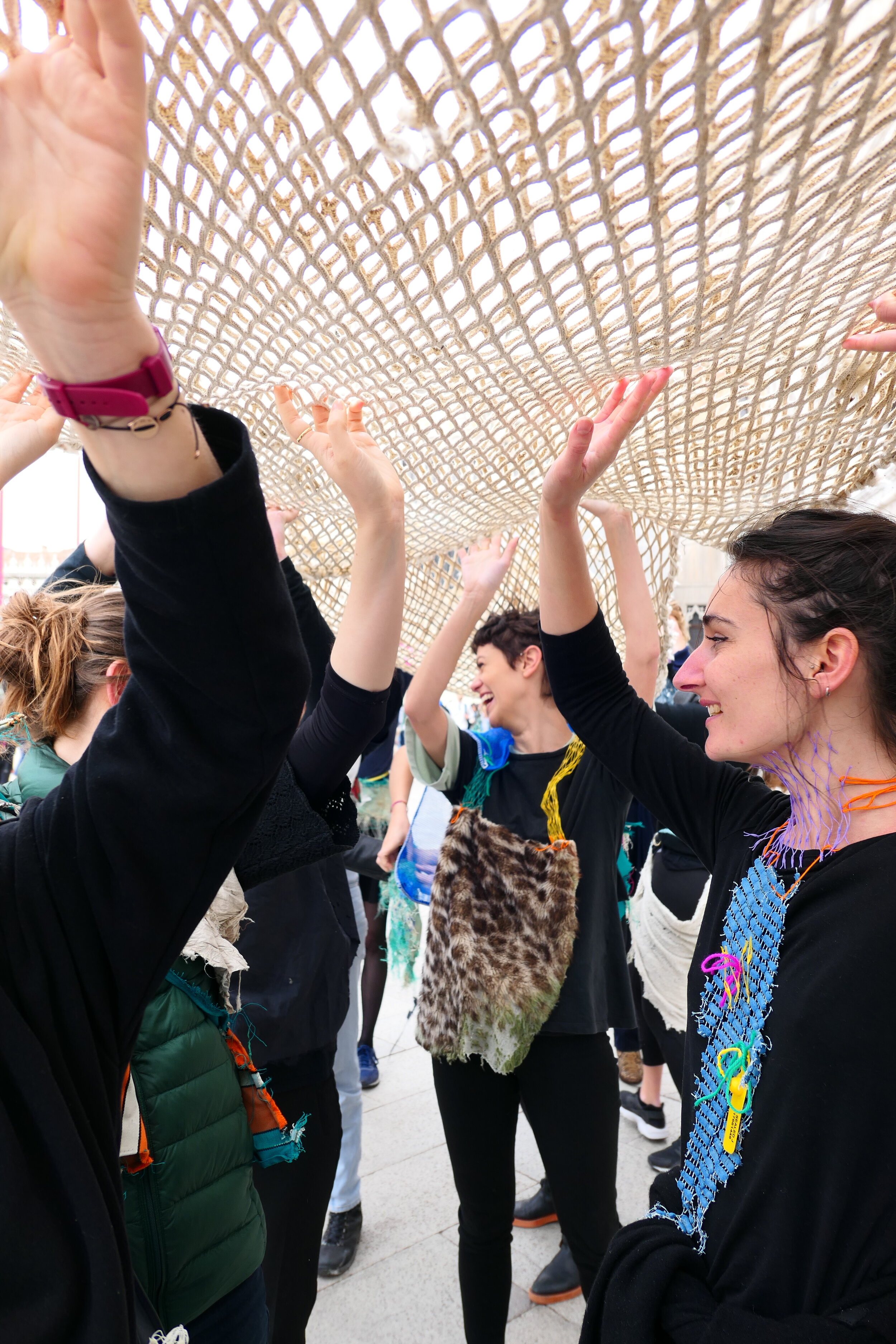
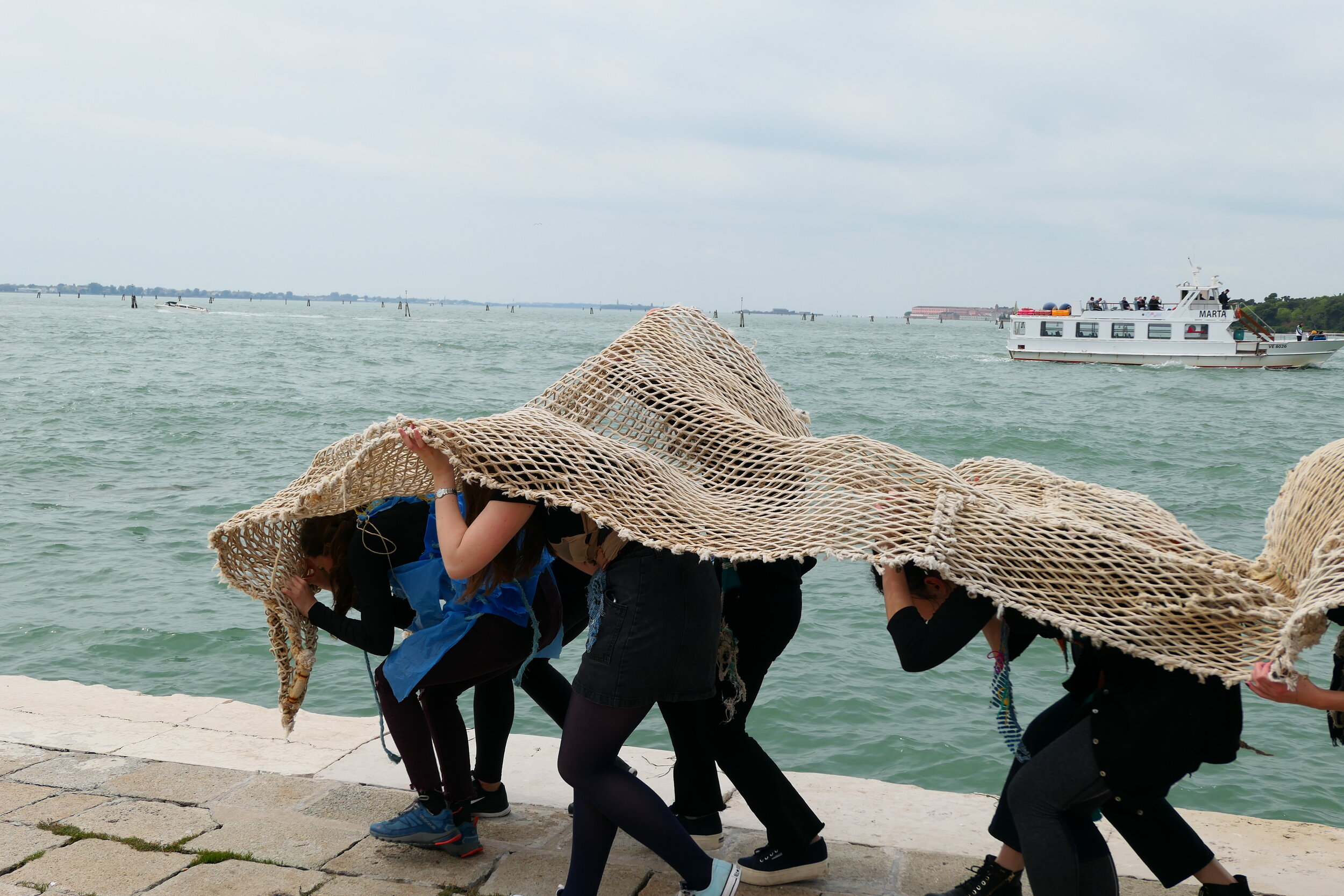
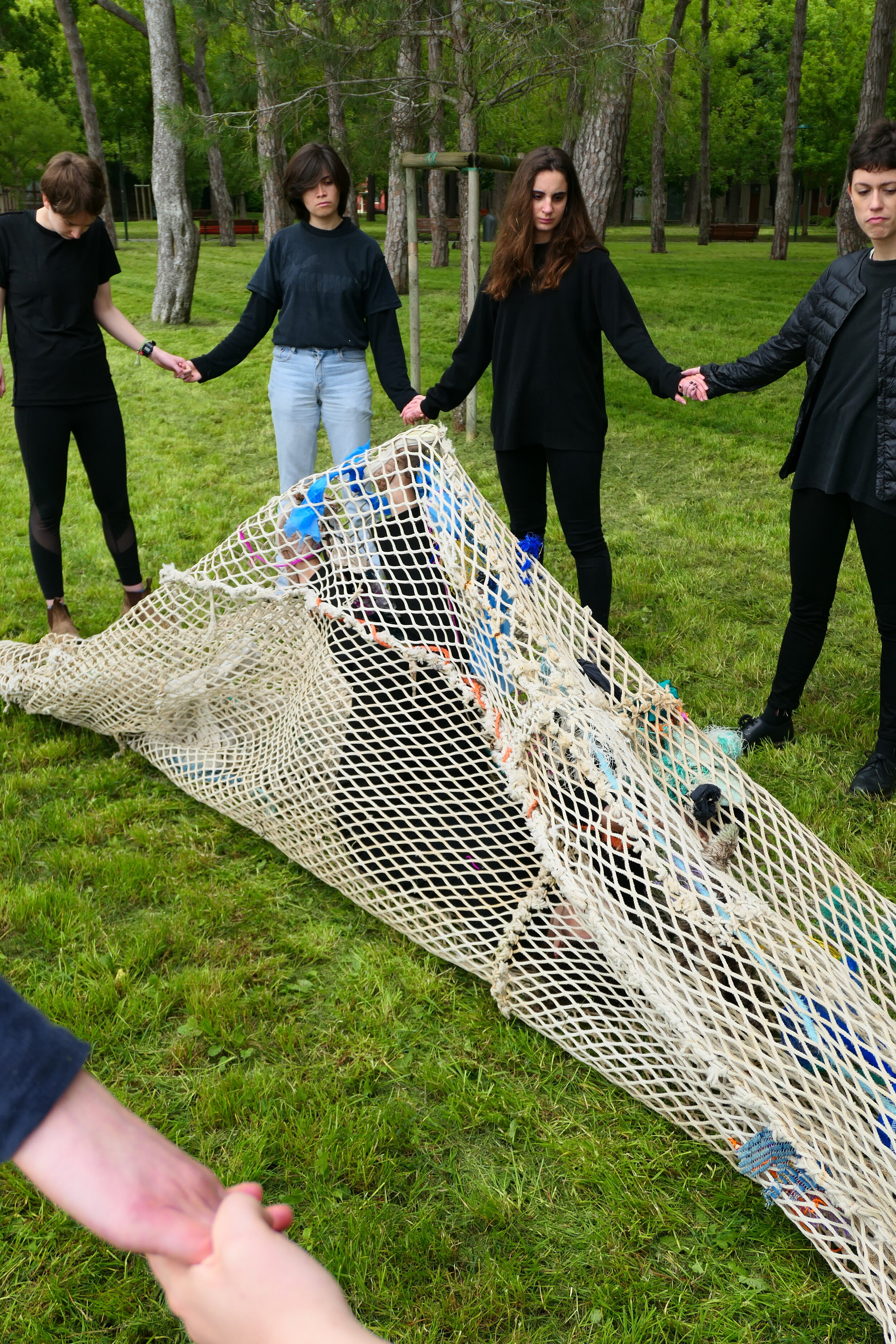
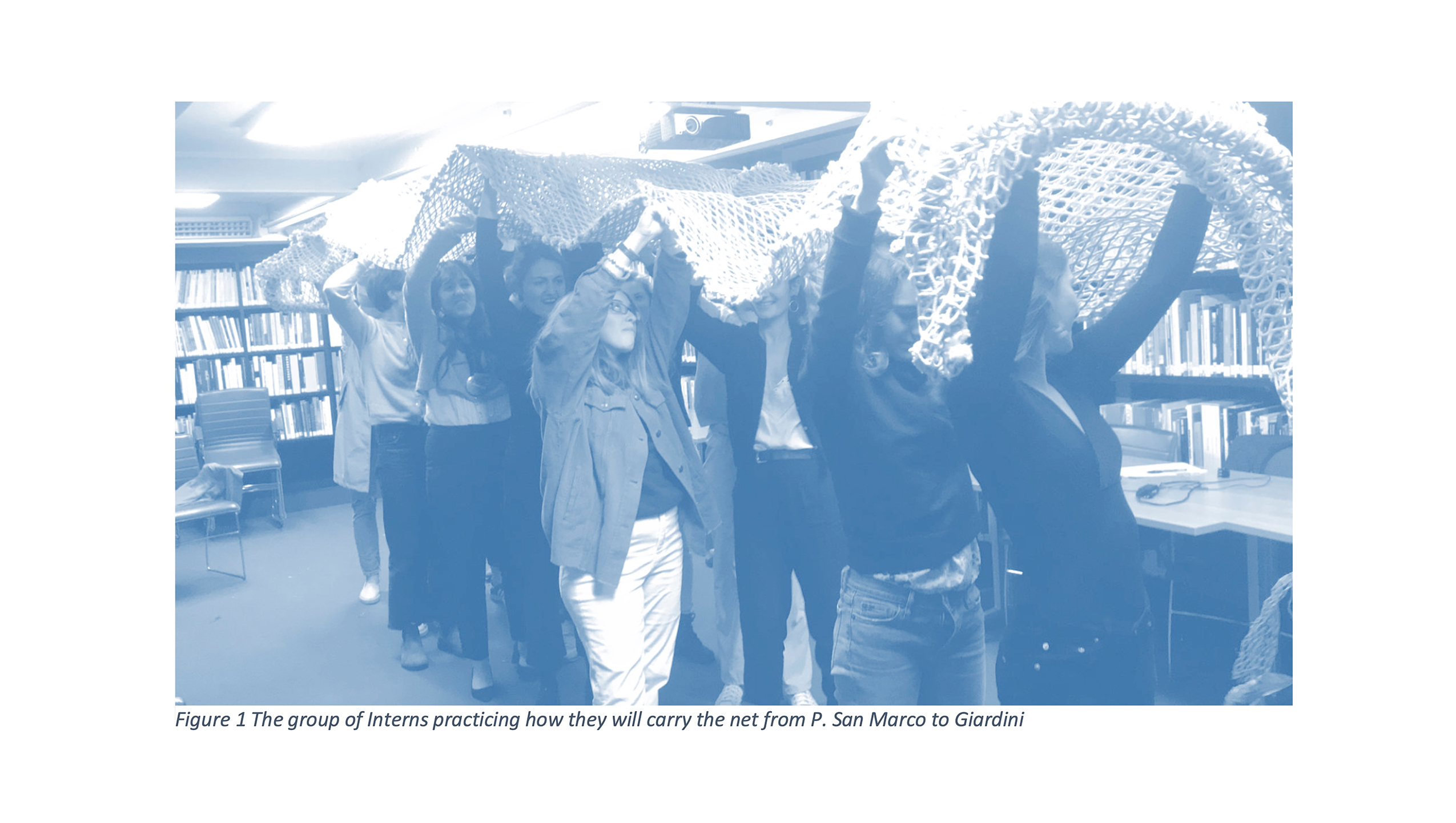
The birth of the Project (Re)Tracing Routes began as I was searching for a fishnet. I could envision this net clearly even though I had yet to hold it in my hands. I visualized it being the length of several bodies, with its slumping form masticated by a lifetime of barricading defensive fish. For generations, our ancestors practiced sustainable fishing methods that fed and replenished coastal communities. In the industrialized world, we exploit the conventionality of the fishnet rendering it more as a trap or a weapon, than a functional tool. We fish more than the environment can sustain and we use nets that are manufactured with nondegradable polythene plastics. In the era of the Anthropocene1, we need to speculate ecology and the “new natural2.”
Future generations are born to bodies that have bioaccumulated leads, plastics, and atmospheric chemicals. In the performance (Re)tracing Routes, we will reconceive the conventionality of the Fishnet by deeming it as a symbol for the “womb”. Laying defeated on the shores of Santa Maria Del Mare, I found this fishnet womb I was searching for. This revelation was rivalled by the treacherous reality that I knew I would find this polluted fishnet miles away from my birthplace of California. Miles away from where my interest in weaving marine-debris nets began.
1 Anthropocene: the current geological age, viewed as the period during which human activity has been the dominant influence on climate and the environment.
2 The “new natural” accepts that there is no division between the industrially manufactured with the naturally conceived. All of our pollution, plastics, and chemicals are embedded into the environment and our bodies.
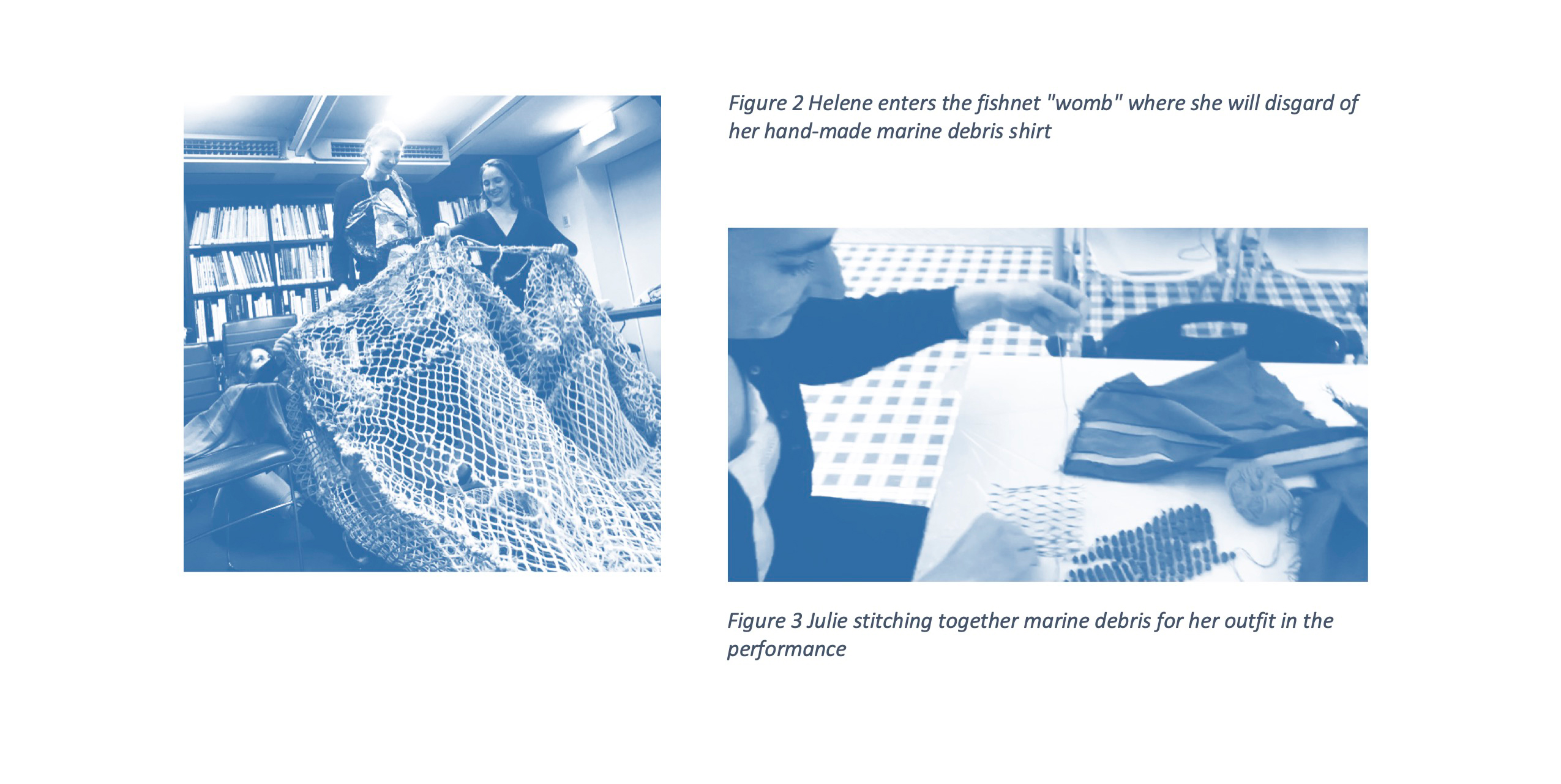
If we trace the origins of human practices of fishing and weaving, we can string imaginary threads across the woven Spirograph that is the ever-connected world. We are all human. We are all reliant on Nature. We can all be traced back to the same origin. We all face the consequences of overfishing, plastic toxicities, and climate change. Consequently, we all suffer together. I felt the urgency to bundle up the fish net’s long slender body and transport it away from the beach. But the day had not come. It was much too large to carry alone. I left the net on the beach in Santa Maria Del Mare to continue to pollute the shoreline. For the following two weeks, its existence penetrated my thoughts throughout the days.
I was ready to retrace my path, only now I had an ambitious friend with me, who would help me drag this waste across the lagoon and along the canals of the city center. We began to embody the net as an extension of ourselves. We held this massive article of pollution the same way in which an offspring is held closely to its mother. In the act of embodying the pollution, we do not only acknowledge its presence in the ocean, but we realize that these toxins return to our bodies during our direct reactions with the environment every day. We acknowledge the limitations of humankind. The Anthropocene is the era we are born into, there is no way of reversing it. From here on out it depends on the attitudes and practices we have towards environmental degradation and climate change.
(Re)tracing Routes reached its fruition in collaboration with a group of fellow interns from the Peggy Guggenheim Collection. In our free time after work we had long conversations over the course of three months regarding how the earth is on fire and our efforts to understand and combat it are unsatisfactory. The ultimate irony is that we have created something from nature (polythene3) that will not biodegrade in nature. We have reached an era in which no human is born without the toxins we have inserted into nature succeeding industrial globalization. (Re)Tracing Routes presents the confliction and desperation to accept and react to the “new nature” of the Anthropocene.
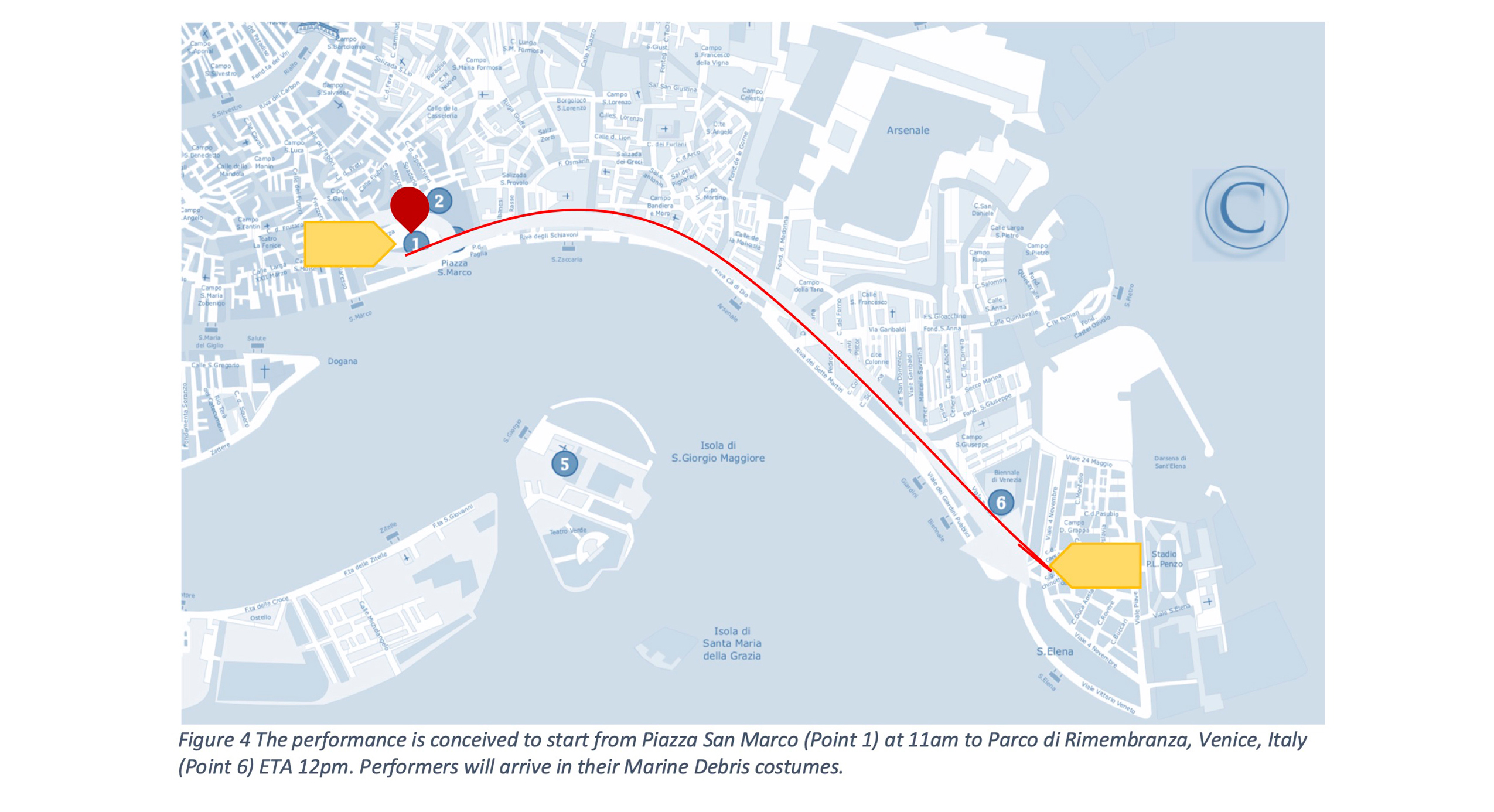
Together with this group, we will navigate from Piazza San Marco to the grassy park corner of Parco di Rimembranza. We will carry the fishnet above our heads. On our shoulders and backs, we wear articles of clothing that we made by hand from marine debris collected on Lido. At the final destination of the Parco di Rimembranza, we lay down the net and begin our ritual. Each one of us will enter the net, shed the plastic pollution we have embodied, and weave our waste into the womb-like passage of the net. The polythene fish net is symbolic for the mother’s womb. As we insert our pollution, we suffocate our mother and in affect we harm the very thing that gave us life. We re-emerge, reborn to the Anthropocene.
3 Polythene: a tough, light flexible synthetic resin made by polymerizing ethylene, chiefly used for plastic bags, food containers, and other packaging.
 emma Akmakdjian