Barren
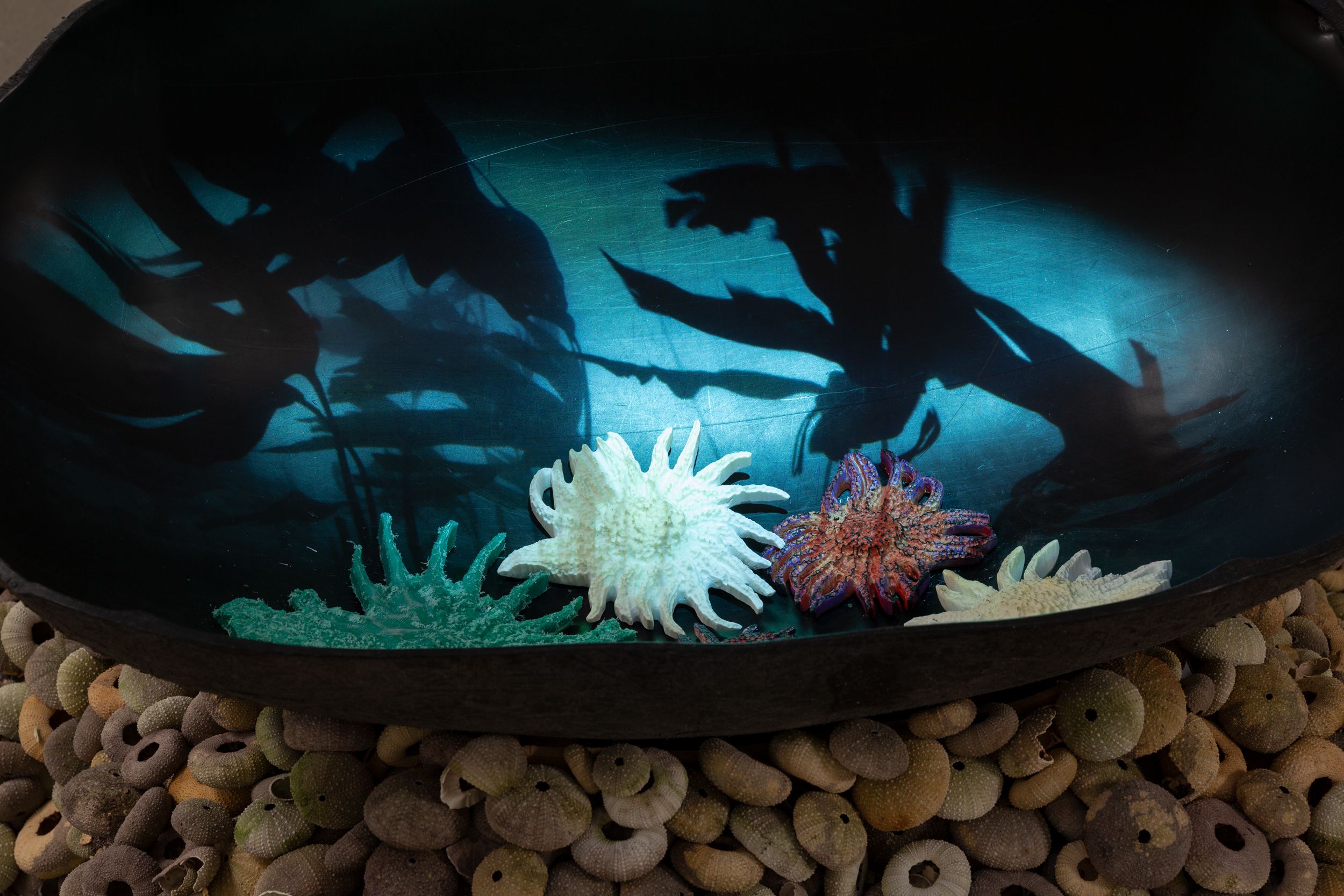
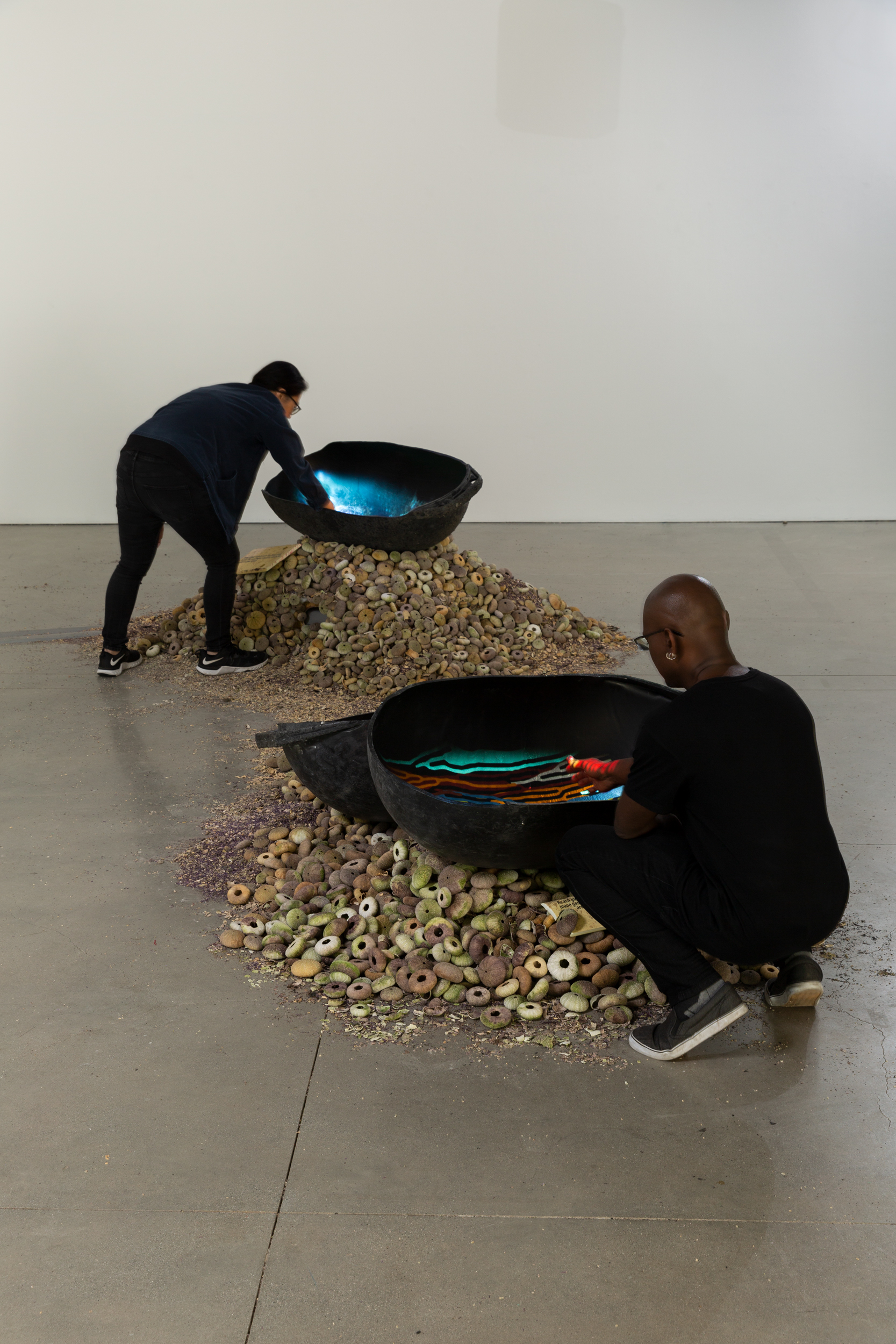
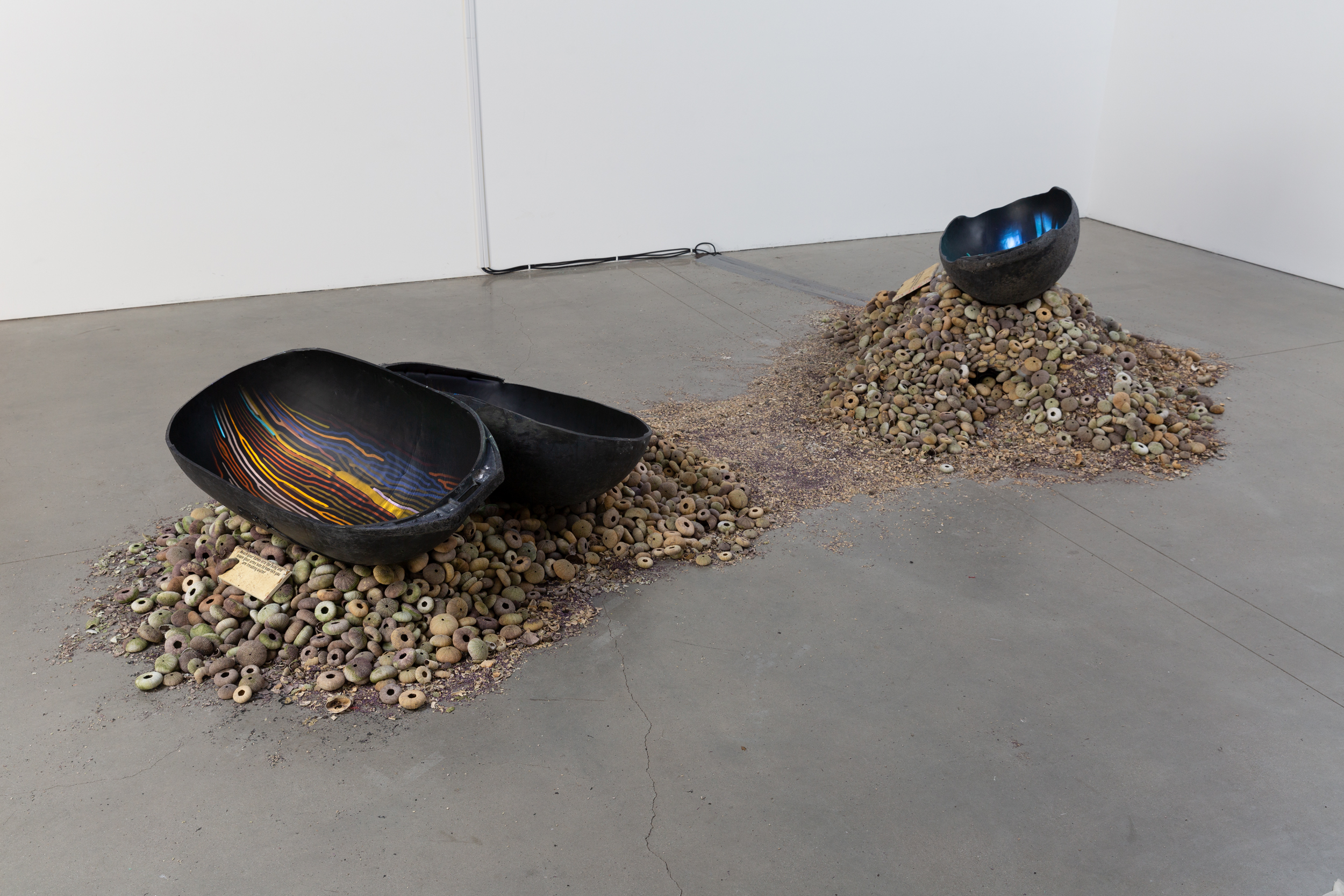
300 pounds of sea urchin shells from a reef restoration project in Fort Bragg (Courtesy of the Nature Conservancy), large marine debris buoys (collected by CSUCI scientists on Santa Rosa Island), giant kelp (Macrocystis Pyrifera) DNA visualizations borrowed from Nuhdzin Labratory, USC, CA and NCBI, Molino Peru. Underwater footage by Patrick Webster, Red Fish Rocks, OR. Exhibition filmed by Leslie Foster.
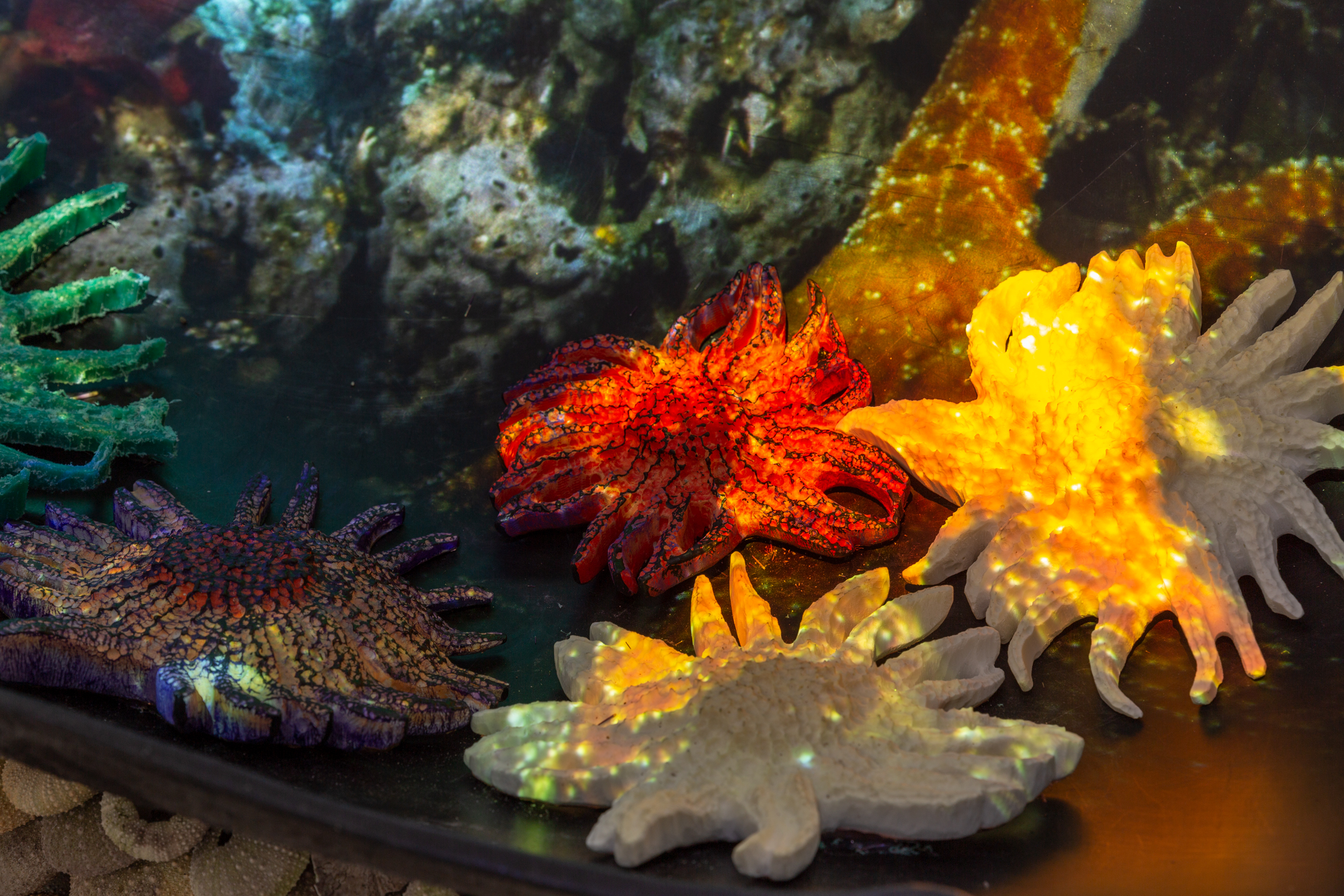
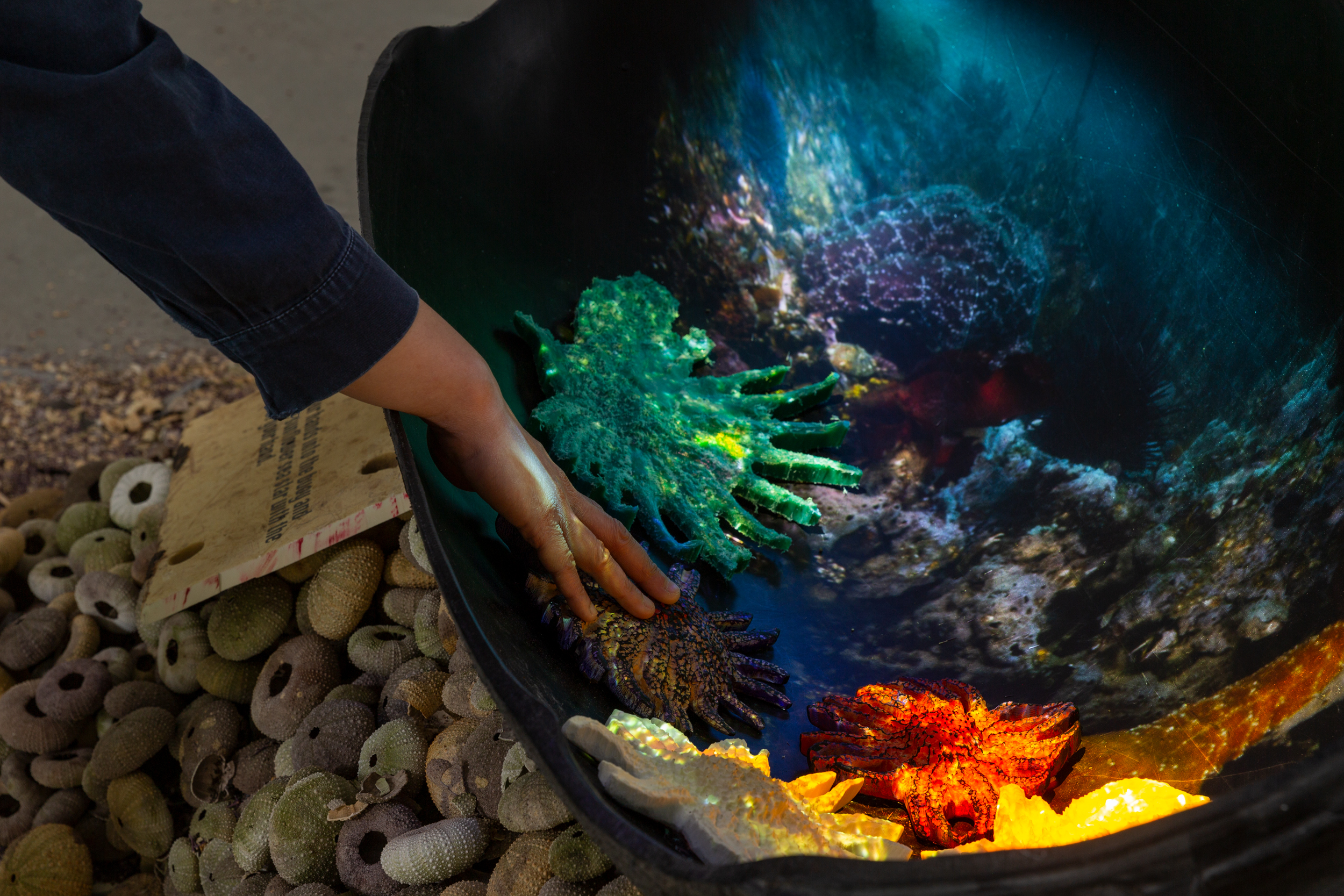
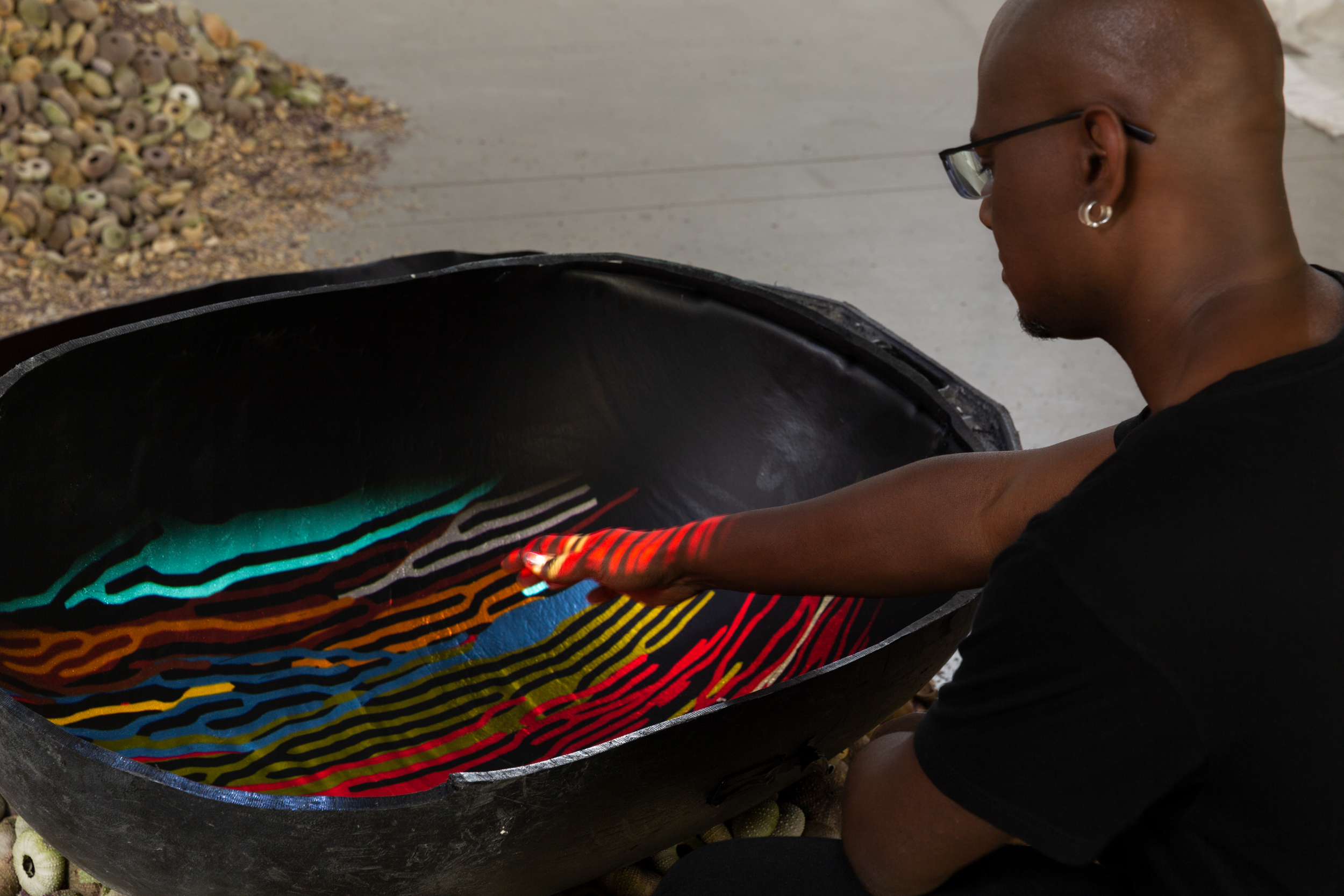
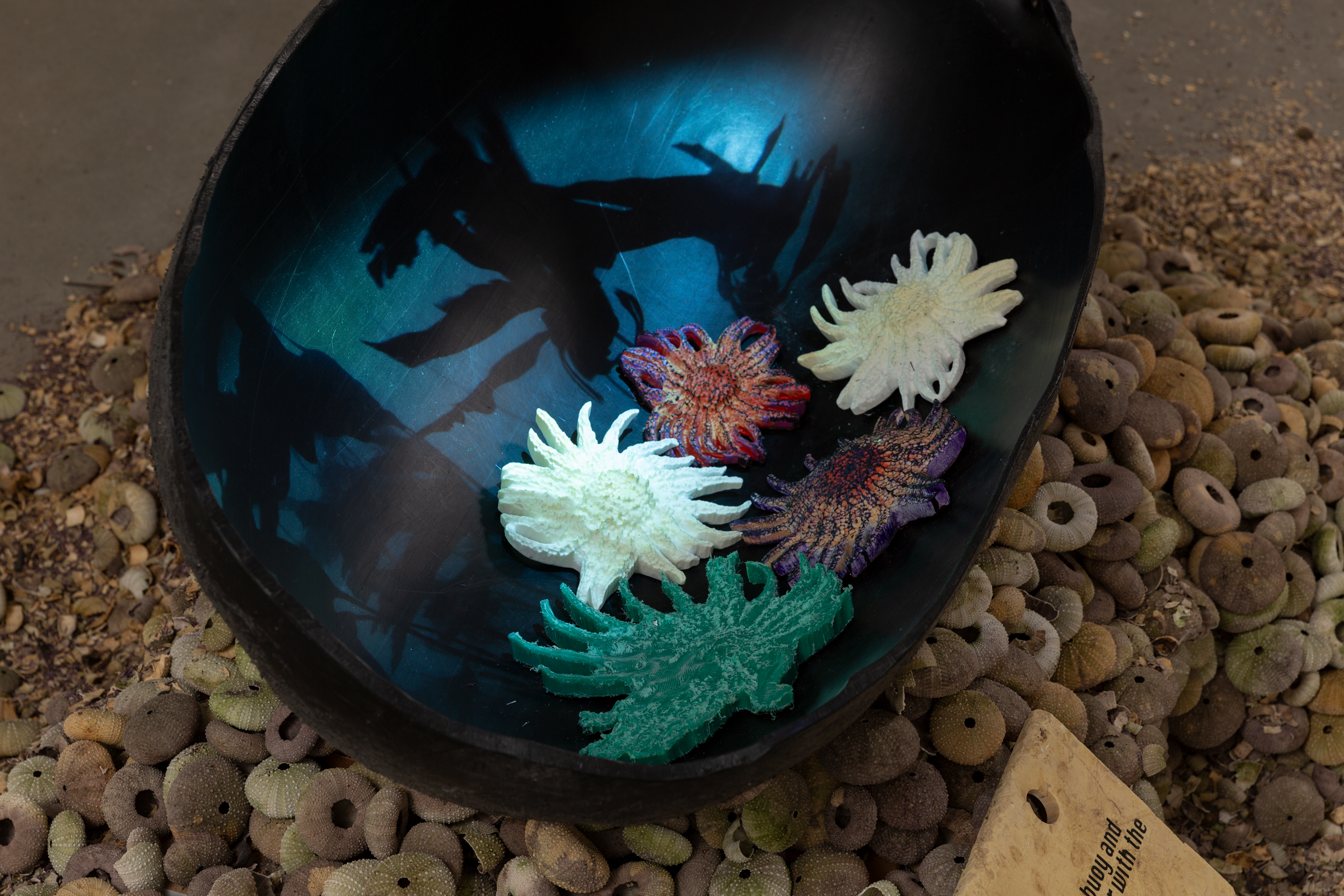
Barren is an encounter of the kelp forest using scientific byproducts and climate data. Each buoy is a 'touch pod' where visitors experience their environment by touching coarse sculptures of sunflower sea stars (a keystone predator of the forest) and listening to touch-activated sounds rather than relying solely on sight, where we often see and feel different truths. For example, a dyeing coral reef or a collapsed kelp forest might still be beautiful but misleading. Without historical and cultural knowledge of change, we might never know what we are losing until it is gone.

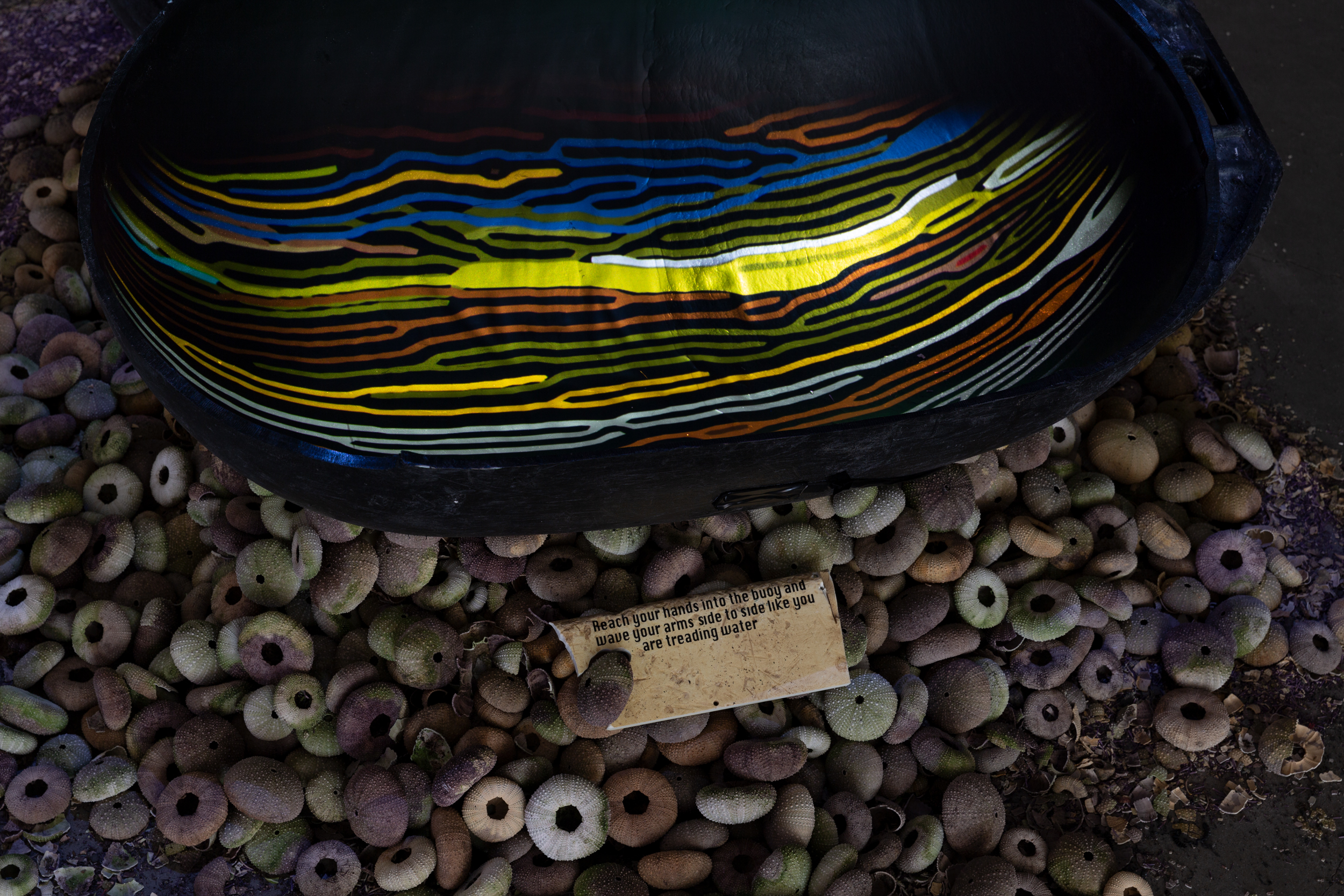
Each pod represents either the macro or micro scale of climate change. On the micro side, two halves of a buoy display interactive data of the Heat Shock Protein in giant kelp visualized in experimentation with a biology lab at UCLA. In the background, a single buoy sits atop a pile of urchin shells collected by the Nature Conservancy, playing footage of the last remaining kelp forests in Southern Oregon. To interact with either pod, visitors obtrusively step over thousands of urchin shells that crunch under their feet..


 emma Akmakdjian