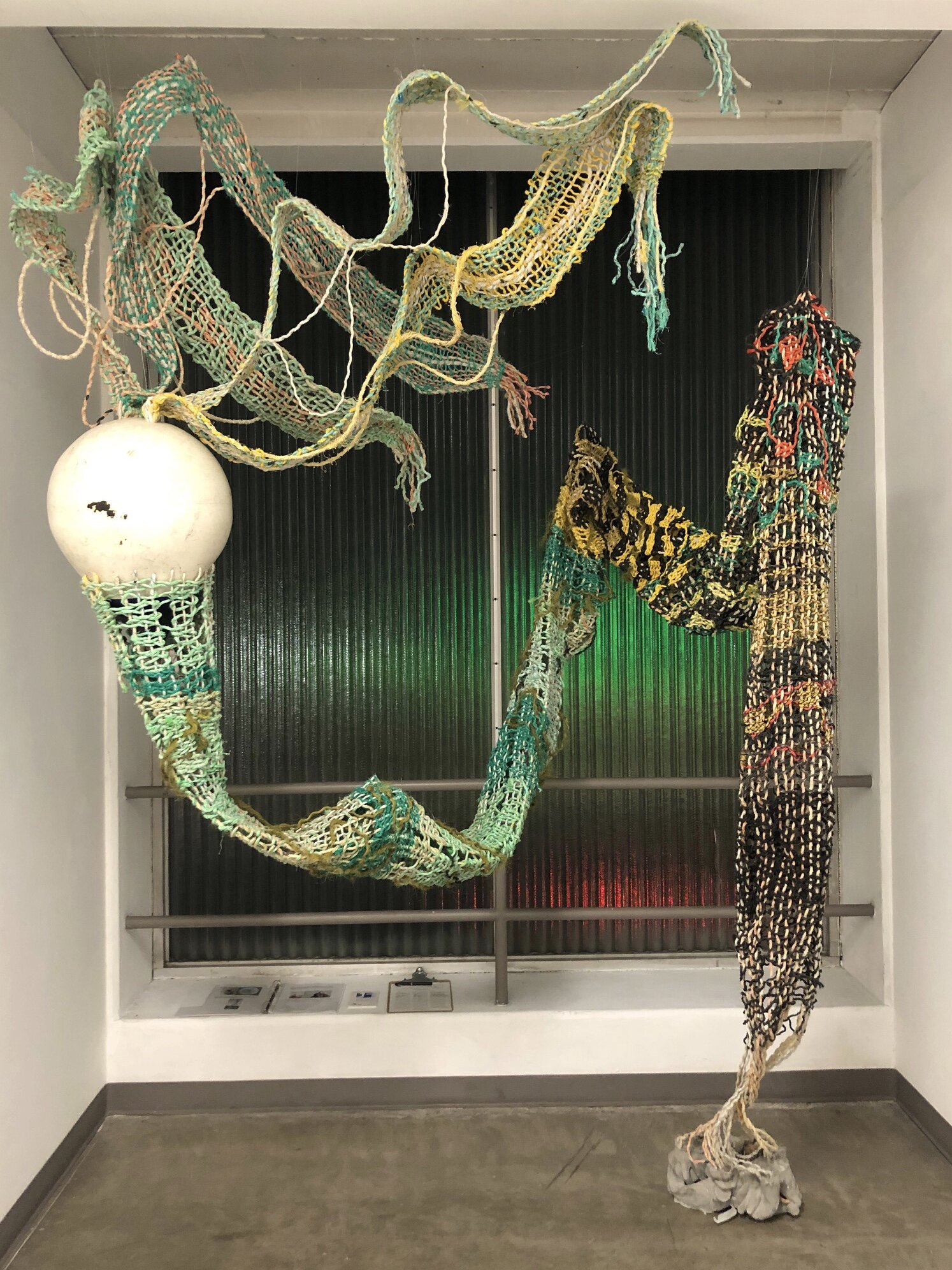
Anthropocene Kelp Forest
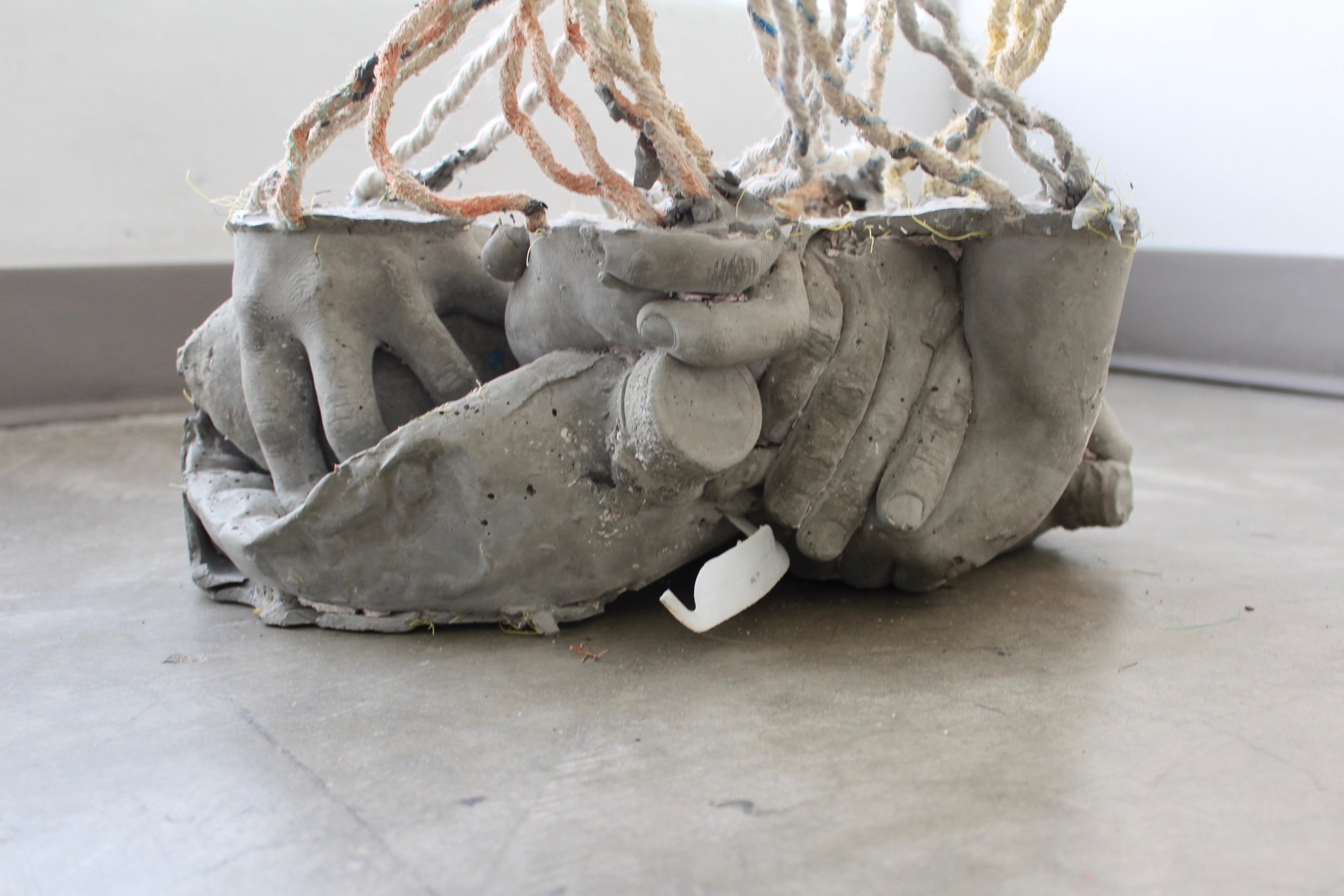
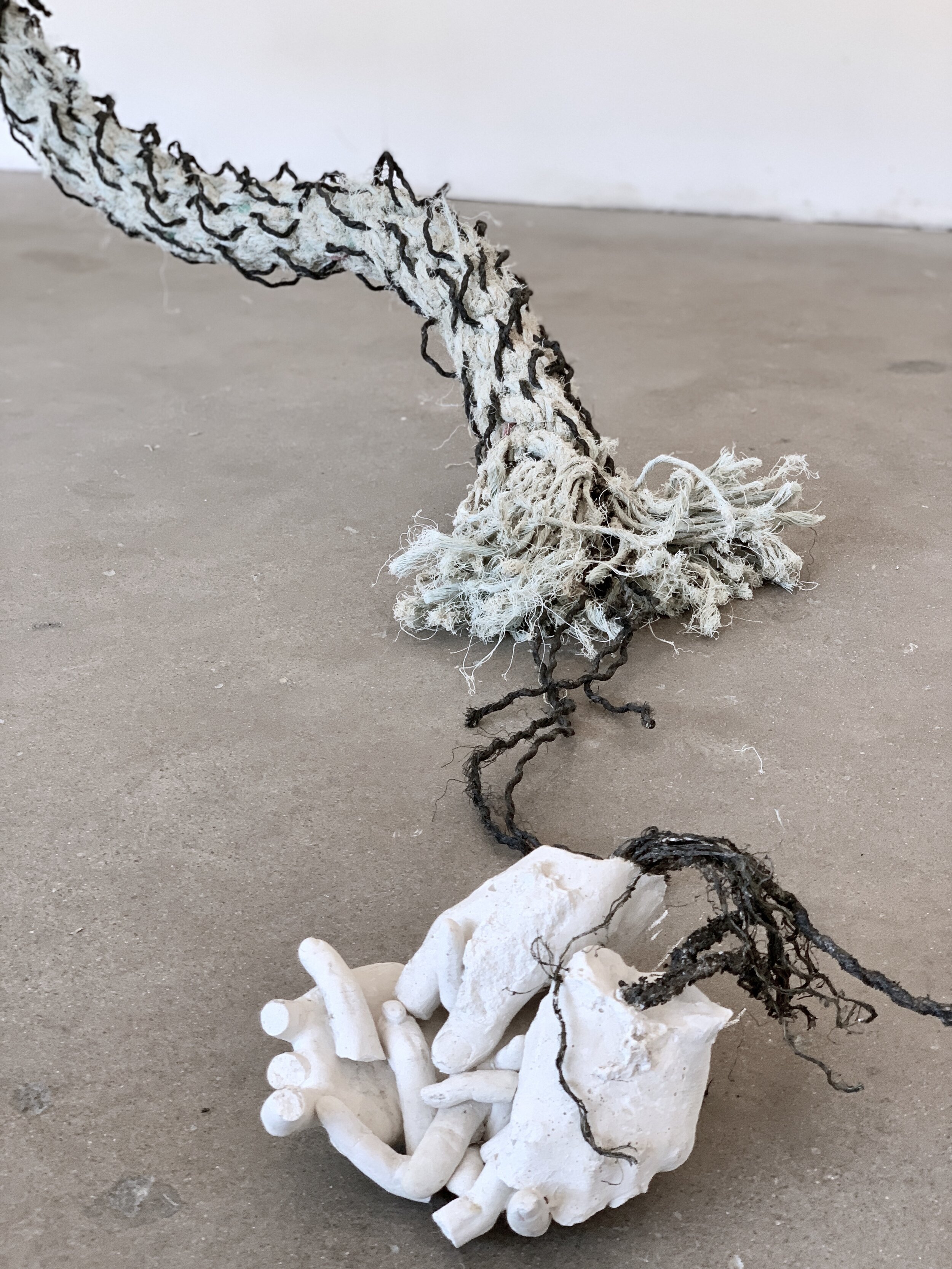
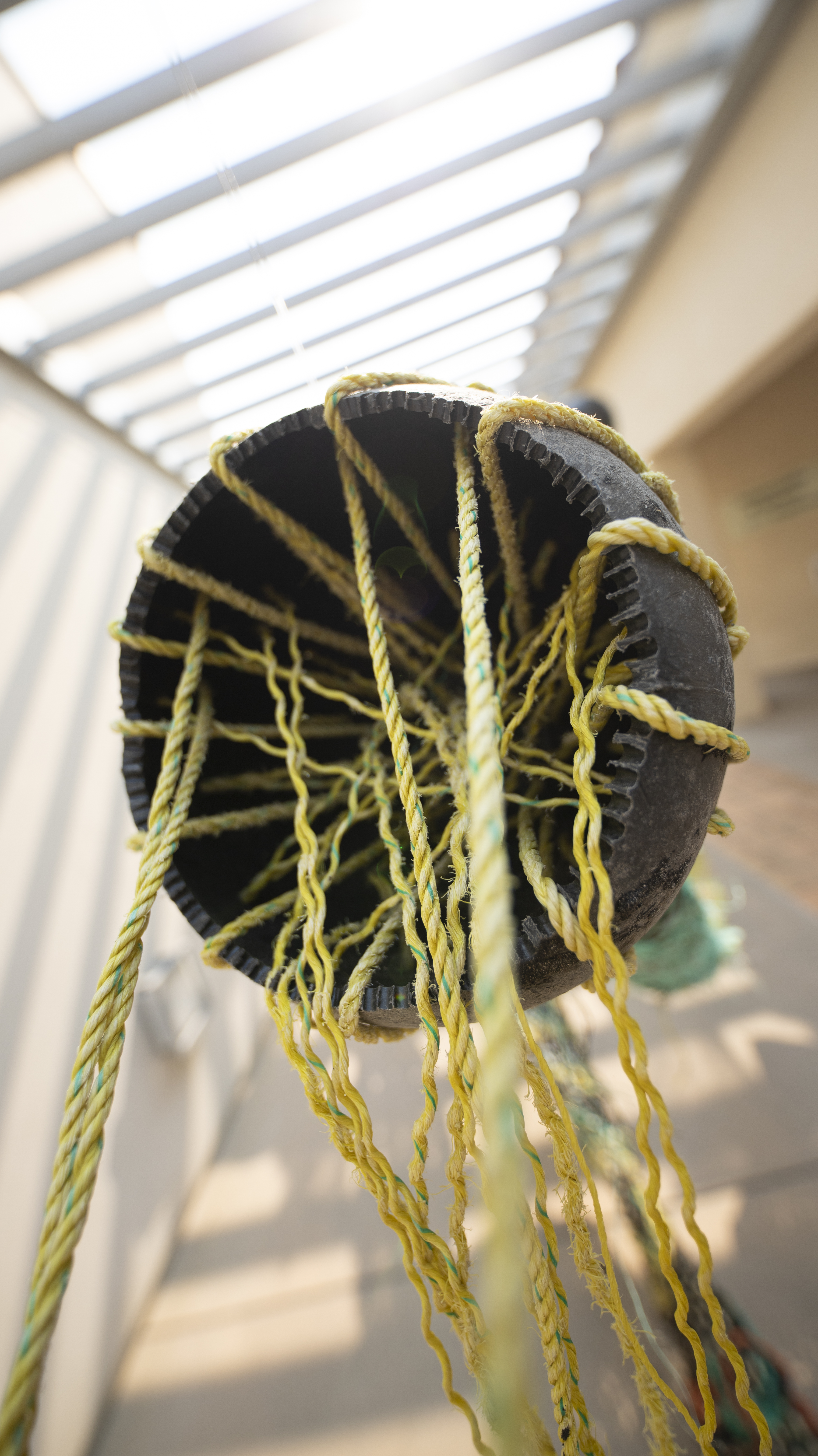
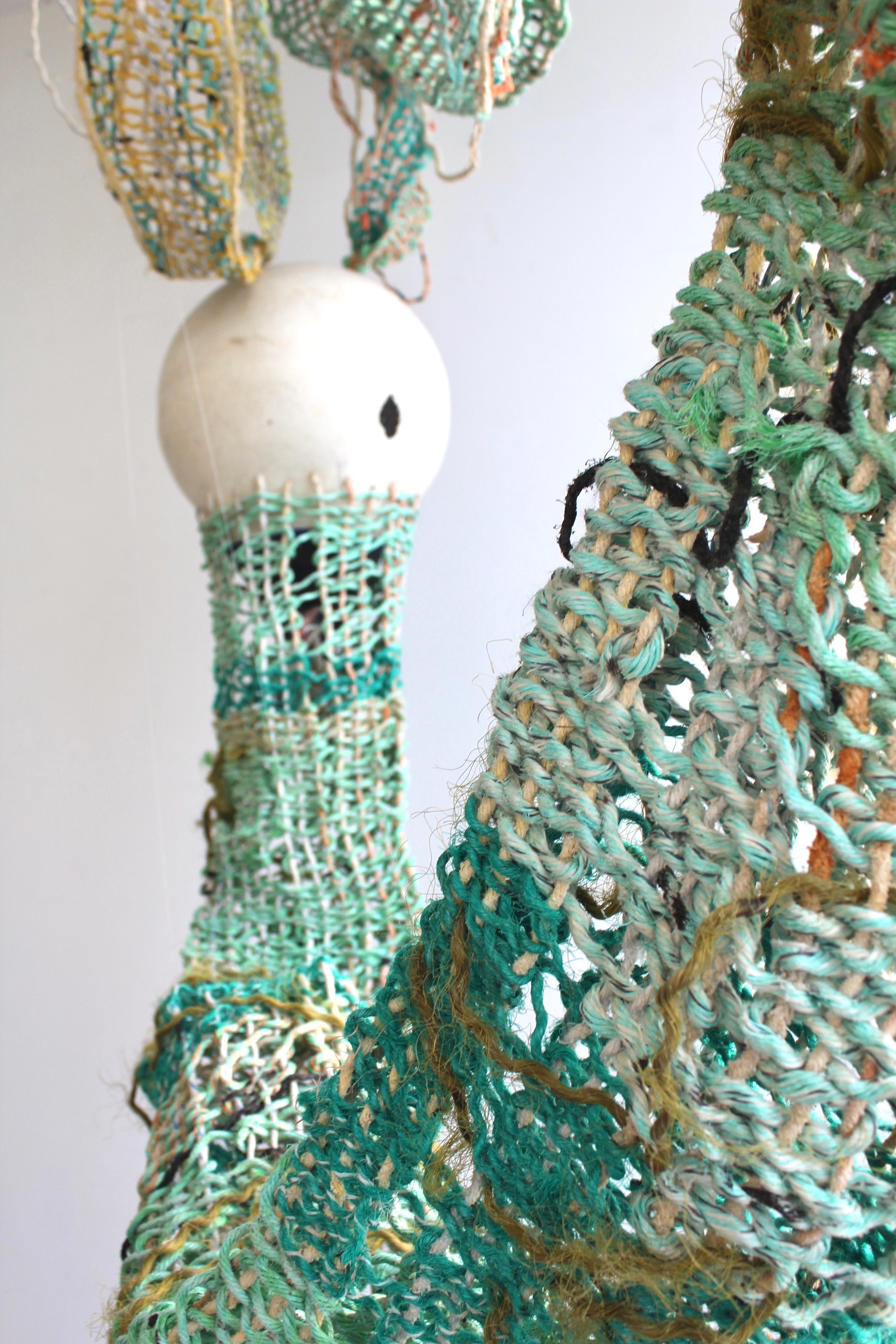
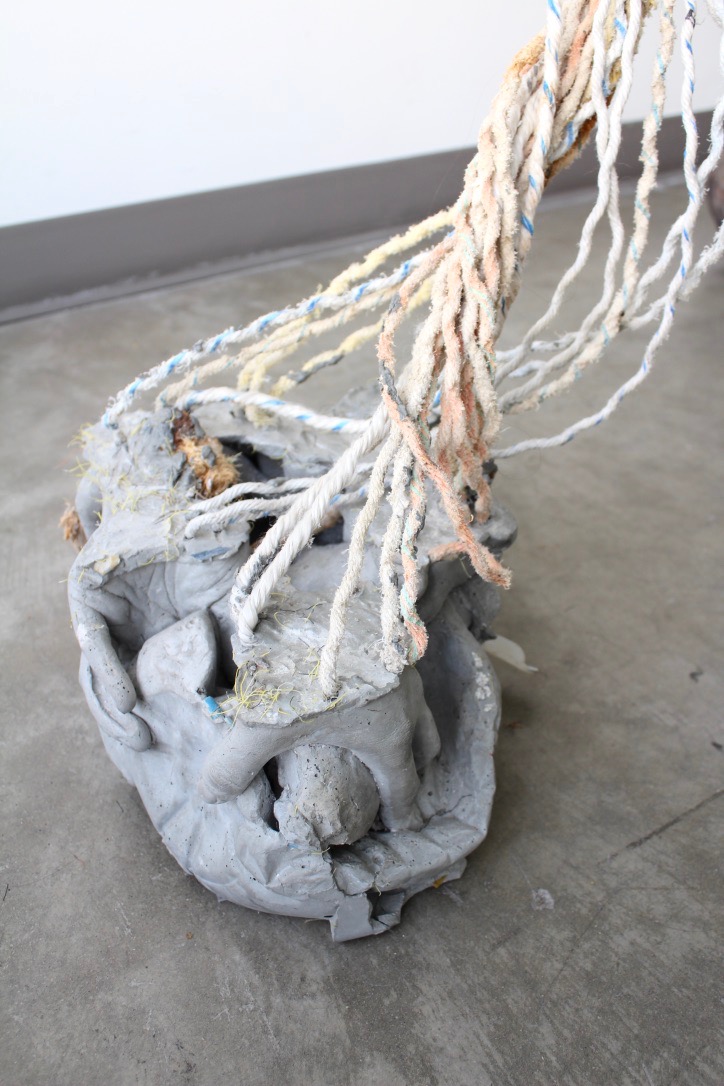
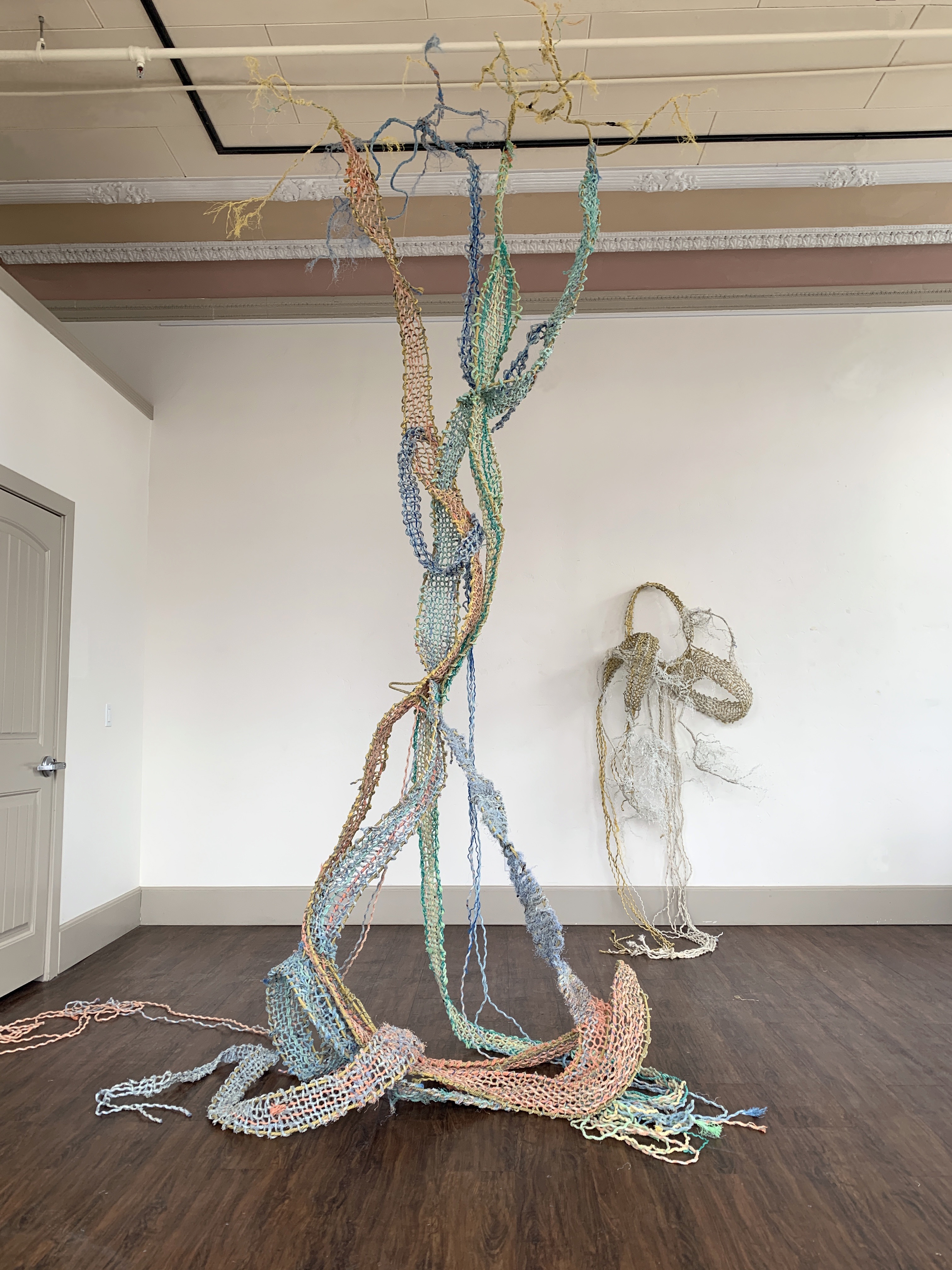
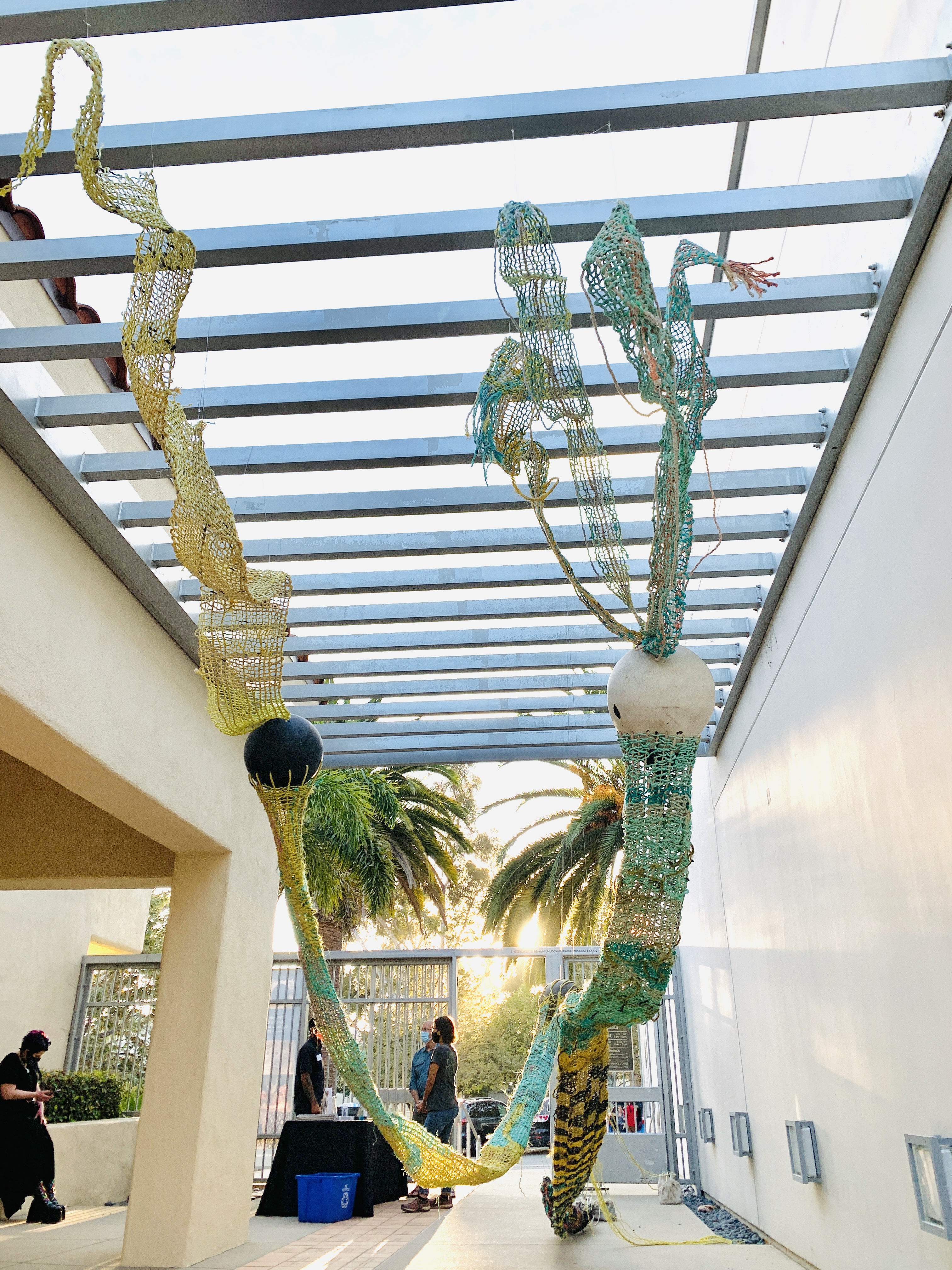
marine debris rope, buoys, urchin shells, ceramic, plaster, cement, plastics collected on Santa Rosa and Santa Cruz Island.
Kelp forests are facing rapid decimation brought forth by climate change and overfishing. A series of human interventions including greenhouse gas emissions, the 19th century fur trades, and overfishing have destroyed biodiversity in this otherwise rich ecosystem that is home to thousands of endemic species. With a lack of predators, sea urchins are left alone on their prowess to graze every last sea kelp stalk. From Baja California up to Southern Oregon, forests are disappearing at alarming rates.

These woven sculptures are made to resemble the qualities of kelp but are made entirely of marine debris fishing gear collected by dozens of scientists from California State University Channel Islands under a NOAA (National Oceanic and Atmospheric Administration) Marine Debris Grant program to clean debris off of mainland Ventura, Santa Rosa, and Santa Cruz Island (the Channel Islands are the  ancestral land of the Chumash).
In several temperate regions of the world, only 5% of kelp forests remain. Kelp forests are holding on by a thin thread.




 emma Akmakdjian